Trump Says Venezuela Surrounded by Largest Warships Ever Assembled in South America
Trump Says Venezuela Surrounded by Largest Warships Ever Assembled in South America
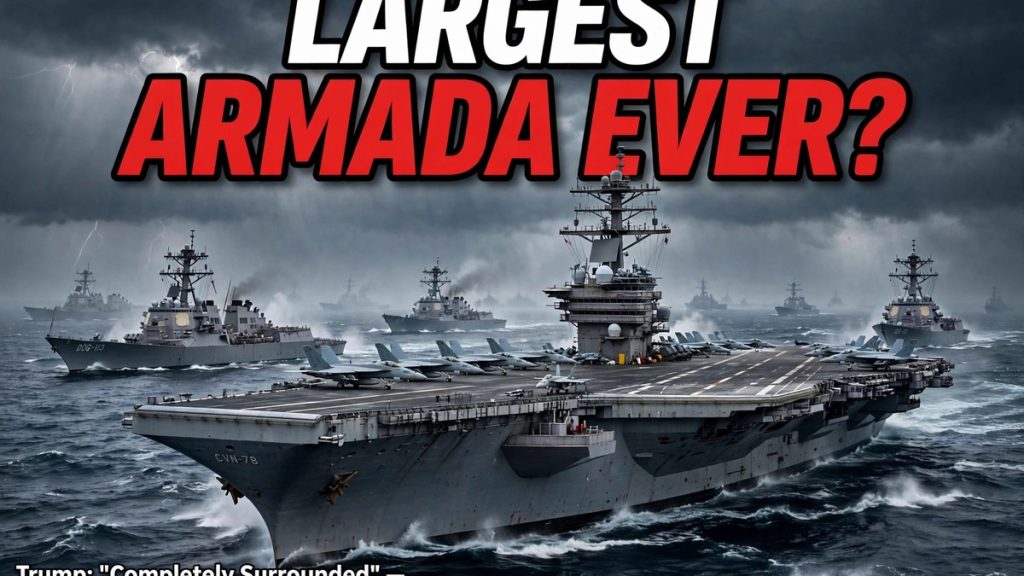
United States President Donald Trump said Venezuela is completely surrounded by the largest naval force ever assembled in the history of South America, as Washington increased military pressure on the government of President Nicolas Maduro. The claim about Trump Venezuela warships came in a social media post in which Trump also demanded the return of oil, land and other assets he said had been taken from the United States.
Trump wrote that Venezuela was completely surrounded by the largest armada ever assembled in the history of South America. He added that the force would only get bigger and that the shock to Venezuela would be like nothing it had ever seen before. The message was posted as the United States kept a large naval presence in the Caribbean, close to the Venezuelan coast.
The post also announced a total blockade of sanctioned oil tankers going into and out of Venezuela. Trump accused the Maduro government of using oil revenue to finance drug trafficking, human trafficking, murder and kidnapping. Venezuela rejected the threat and said it would defend its sovereignty.
What Trump Said About Trump Venezuela Warships
Trump described the naval force around Venezuela as the largest armada ever assembled in the history of South America. The wording was his own, posted on his social media platform, and it was repeated in reports by several news organisations that quoted the post in full. He did not publish a list of ships in the post itself.
Trump said the pressure would continue to increase until Venezuela returned oil, land and other assets to the United States. He linked the demand to his broader argument that Venezuela had used oil wealth to support criminal activity. The Venezuelan government has denied those accusations and has described the United States campaign as an attempt to seize its natural resources.
The language in the post was direct and confrontational. Trump has used similar language in earlier statements about Venezuela, in which he presented the military buildup as part of a campaign against drug trafficking. Critics in Washington have questioned whether the stated aim matches the scale of the deployment.
The Naval Buildup in the Caribbean
The United States has built up a large military presence in the Caribbean in recent months. Reports put the number of warships in the region at 11, the most in decades, including the aircraft carrier USS Gerald R. Ford, the largest aircraft carrier in the world. Several amphibious assault ships, destroyers and support vessels were also reported to be operating in the area.
Thousands of United States troops were reported to be in the region, with estimates of around 15,000 military personnel. Maritime patrol aircraft, including P-8 Poseidon aircraft, were also operating over the Caribbean. The buildup was described by analysts as the largest United States military deployment near Venezuela in decades.
United States forces had also seized a sanctioned oil tanker off the coast of Venezuela in the days before the post. United States officials said the vessel, called the Skipper, was involved in an illicit oil shipping network and was carrying about 1.8 million barrels of oil. Officials said the tanker had been falsely flagged and was used to move oil between Venezuela and Iran.
The seizure followed a series of United States strikes on vessels in the Caribbean and the eastern Pacific since September. Washington said the vessels were carrying drugs bound for the United States. The strikes drew scrutiny in Congress, where lawmakers from both parties asked for more information about the legal basis for the operations and the evidence behind each strike.
Why Washington Says the Pressure Is Necessary
The Trump administration has said the campaign is about stopping drugs from reaching the United States. Officials have argued that Venezuelan territory and waters are used by trafficking networks, and that pressure on the Maduro government is needed to disrupt those networks. Trump has also accused Maduro of leading a drug cartel, a claim the Venezuelan government denies.
In November, the administration designated the Cartel de los Soles as a foreign terrorist organisation. The designation gave Washington additional legal tools to target people and networks it links to the group. The administration has also designated the Maduro government itself as a foreign terrorist organisation in its public statements.
Supporters of the approach argue that sanctions alone did not change the behaviour of the Venezuelan government. They say a visible military presence, combined with action against oil tankers, raises the cost for Caracas and for companies that move Venezuelan oil. Opponents argue that the measures hurt ordinary Venezuelans more than the government, because oil is the main source of income for the country.
Venezuela produces roughly one million barrels of oil per day. Oil revenue supports government spending, imports and public services. A blockade of sanctioned tankers would therefore affect the wider economy, not only the government. That point has been raised by analysts who study the impact of sanctions on Venezuela.
How Venezuela Responded
The Venezuelan government rejected what it called a grotesque threat. In a statement, Caracas said it would not accept a naval blockade and described the United States move as an attempt to steal the wealth of the nation. Officials said Venezuela would defend its homeland against what they called imperial aggression.
Venezuela deployed its navy to escort oil tankers leaving its main port. The move was presented as a defence of sovereignty and a signal that Caracas would continue to trade oil despite United States pressure. President Maduro said Venezuela would continue its oil trade and would not be intimidated by the deployment.
Caracas has also sought support from other countries. Venezuela has oil and political ties with China and Russia, and officials in Caracas have pointed to those relationships as a reason why pressure from Washington would not work in isolation. Any action against tankers linked to Chinese or Russian companies would carry wider diplomatic risks.
What a Blockade Would Mean in Practice
A blockade in the traditional sense involves sealing a country’s coastline completely. Analysts have noted that 11 warships, even with an aircraft carrier, would not be enough to seal the entire Venezuelan coast. The United States announcement was therefore read by many analysts as a warning that more tankers could be seized, rather than a complete closure of Venezuelan waters.
The distinction matters for international law. A naval blockade is generally treated as an act of war. Members of Congress have raised that point in public debate.
Representative Joaquin Castro, a Democrat from Texas, said the naval blockade was unquestionably an act of war. The White House has not accepted that description and has presented the action as enforcement against sanctioned vessels.
For shipping companies, the announcement created immediate uncertainty. Tanker operators, insurers and buyers of Venezuelan oil had to weigh the risk of seizure against the value of the cargo. A single seizure can cost tens of millions of dollars, and insurers often raise premiums sharply when a region is described as a blockade zone.
For Venezuela, the economic effect would depend on how long the pressure lasts and how many tankers are stopped. Venezuela already operates under extensive United States sanctions, and much of its oil trade already takes place through intermediaries. A tighter enforcement campaign could still reduce the volume of oil that reaches buyers and the price Venezuela receives for each barrel.
Legal and Political Questions in Washington
The campaign against vessels has drawn bipartisan scrutiny in Congress. Lawmakers have asked the administration to explain the legal authority for strikes on boats in international waters, and to provide evidence that each vessel was carrying drugs. The administration has said the operations are lawful, but has not published detailed evidence for every strike.
The debate is not only about Venezuela. It is also about the power of the president to order military action without a formal declaration of war. The United States Constitution gives Congress the power to declare war, while the president serves as commander in chief. That division has produced repeated disputes in past decades, and the Venezuela campaign has revived it.
Inside the administration, officials have given different accounts of the goal. Some have presented the campaign as a narrow operation against drug trafficking. Others, including White House Chief of Staff Susie Wiles in an interview published in Vanity Fair, were quoted as saying Trump wanted to keep striking boats until Maduro gave in. That remark was read by critics as evidence that the aim was political change in Caracas, not only drug enforcement.
Public debate has also focused on the human cost. Each strike on a vessel at sea carries a risk of death for the people on board. The administration has said the targets were drug traffickers. Human rights groups and some lawmakers have asked for independent verification of those claims and for information about who was on each boat.
What Happens Next
The immediate question is whether the United States will seize more tankers. The seizure of the Skipper showed that Washington was prepared to take a vessel at sea. A second seizure would confirm that the blockade announcement was more than rhetoric. A pause in seizures would suggest that the announcement was intended mainly as pressure.
The second question is whether Venezuela will continue to send tankers out under naval escort. Escorts raise the risk of a direct encounter between Venezuelan and United States forces at sea. Both sides have said they will defend their positions, which increases the risk of miscalculation, even if neither side wants a direct clash.
The third question is whether diplomacy will play a larger role. Regional governments in Latin America and the Caribbean have watched the buildup with concern. Many have called for dialogue and for a peaceful resolution, while also raising concerns about drug trafficking. Their position will matter, because a regional consensus against escalation would make it harder for Washington to act alone.
Oil markets will also be watching. Venezuela is a small producer by global standards, but a disruption to its exports can affect regional supply and prices. The impact would be larger if the confrontation spread to other producers or to shipping routes in the Caribbean.
Trump has said the force around Venezuela will only get bigger. That statement, if followed through, would mean more ships, more aircraft and more troops in the region in the weeks ahead. Whether that leads to a negotiated outcome, a prolonged standoff, or a direct confrontation remains the central uncertainty in the crisis.
Frequently Asked Questions
What did Trump say about Venezuela?
Trump said Venezuela was completely surrounded by the largest armada ever assembled in the history of South America, and he announced a total blockade of sanctioned oil tankers going into and out of Venezuela.
How many United States warships are near Venezuela?
Reports put the number at 11 warships in the Caribbean, including the aircraft carrier USS Gerald R. Ford, along with thousands of troops and maritime patrol aircraft.
Why does the United States say it is taking action?
Washington says the campaign is aimed at stopping drug trafficking and at cutting off revenue that it accuses the Maduro government of using to finance crime and terrorism.
How did Venezuela respond?
Caracas rejected the threat, said it would defend its sovereignty, deployed its navy to escort oil tankers, and said it would continue its oil trade.
Is a blockade the same as a declaration of war?
Under international law, a naval blockade is generally treated as an act of war. Some members of Congress have used that description, while the White House has presented the action as enforcement against sanctioned vessels.
The claim about Trump Venezuela warships marked a sharp escalation in a confrontation that had been building for months. A large naval force, a seized tanker, a blockade announcement and a direct challenge to the Maduro government have left the Caribbean facing a period of high tension, with the next move likely to come at sea.