
One in Three Internet Users in Indonesia Uses Paylater Every Week
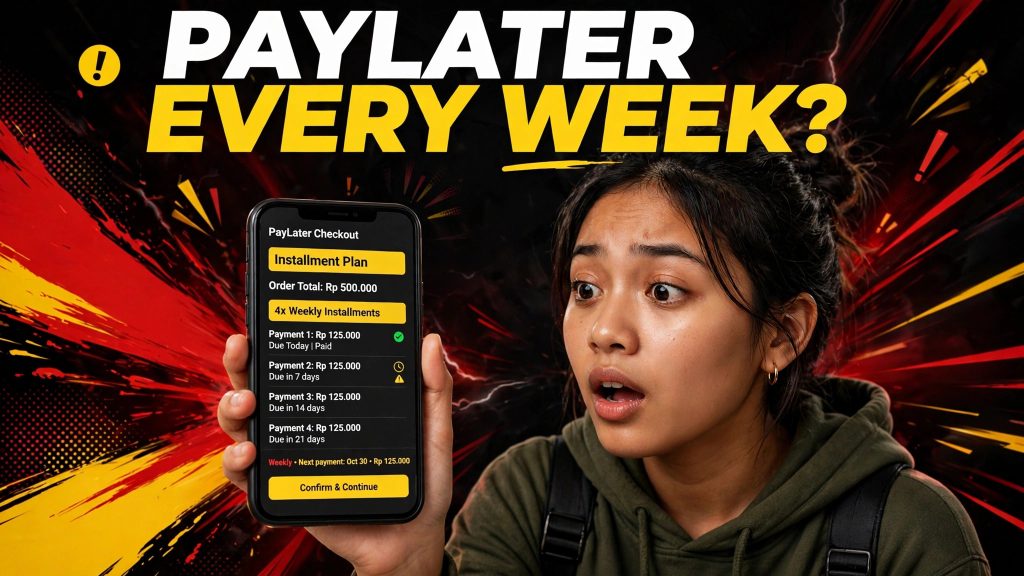
One in Three Internet Users in Indonesia Uses Paylater Every Week
About 34.7 percent of internet users in Indonesia use paylater Indonesia shopping services every week, a rate more than twice the global average and the highest recorded in the latest Digital 2027: Indonesia report. The figure places buy now, pay later at the centre of daily shopping in Southeast Asia’s largest online market, even though the payment method still accounts for a small share of total spending.
The report, published by We Are Social and Meltwater and released in early November 2026, counted 231 million internet users in Indonesia, or 80.2 percent of the population. More than half of those users shop online every week. Paylater has moved from a checkout option to a regular habit for a large part of that audience.
Indonesia’s online shoppers are not only frequent buyers. The report found that 73.1 percent of internet users prefer shopping online to visiting a physical store, the second-highest share among the countries covered. More than two-thirds research brands and products online before buying, and 60 percent turn to social networks for brand information.
Paylater Indonesia Shopping Has Become a Weekly Habit
The weekly paylater figure stands out because the global comparison is much lower. At 34.7 percent, Indonesia’s weekly use is more than double the global average reported in the same study. The report also recorded that 57.2 percent of internet users buy products or services online every week.
That combination explains why paylater feels ordinary in Indonesia. A shopper can order food, clothing, electronics, or a phone, choose an instalment plan at checkout, and pay over the following weeks. The service is built into the main e-commerce platforms, so the choice appears beside bank transfer, virtual accounts, and digital wallets.
Digital wallets still lead by value. Worldpay data cited in the report showed digital wallets accounting for 42 percent of the value of business-to-consumer e-commerce transactions in Indonesia, followed by inter-account transfers at 34 percent. Paylater accounted for only 3 percent of total transaction value, despite its high weekly use.
The gap between frequency and value matters. Paylater is used often, but usually for smaller purchases. A weekly paylater payment is more likely to cover a modest order than a large one, which keeps the total value low while the number of users stays high.
What the Digital 2027 Report Measured
The Digital 2027: Indonesia report is the annual study by We Are Social and Meltwater on how people use the internet, social media, and connected devices. The Indonesia edition was dated November 4, 2026, and was reported in Indonesia on November 5, 2026.
The study counted 231 million internet users in October 2026. About 57.1 million Indonesians still did not use the internet at all. Among those who were online, shopping had become a routine activity rather than an occasional one.
Online shopping accounts for only 8.8 percent of total consumer spending across all retail channels, according to Statista estimates cited in the report. That figure shows the scale of the shift still ahead. Most spending still happens offline, even as online habits grow fast.
The report also found that more than two-thirds of internet users research brands and products online before buying. That behaviour links search, social media, and checkout in a single journey. A buyer may discover a product on social media, compare prices in a marketplace, and then pay with paylater in the same session.
Why Paylater Spread So Fast in Indonesia
Paylater grew because it removed a barrier. Many shoppers in Indonesia do not hold a credit card, yet they want to split a purchase into smaller payments. Paylater offers that option with a short application inside an app the shopper already uses.
The service works like a short-term credit line. A buyer selects paylater at checkout, pays nothing or a small first amount, and repays the balance in instalments over 30 days, three months, six months, or 12 months, depending on the provider and the purchase. Interest and fees vary by provider and by plan.
E-commerce platforms made the option visible. Shopee Paylater, GoPay Later, Kredivo, Akulaku, and Traveloka Paylater are among the services Indonesians recognise. A 2021 survey by DailySocial found Shopee Paylater was the most used paylater service on e-commerce, at 78.4 percent, followed by GoPay Later at 33.8 percent and Kredivo at 23.2 percent.
A later study by Kredivo and Katadata Insight Center found that the share of Indonesians using paylater rose from 28.2 percent in 2022 to 45.3 percent in 2023. The same research found that most users turned to paylater for urgent needs, short-term purchases, and promotions.
Smartphone access helped the spread. Indonesia has more than 190 million smartphone users, and mobile shopping is the default for many buyers. A paylater limit inside a shopping app is easier to use on a phone than a separate credit application at a bank.
New Rules Changed Who Can Offer Paylater
The growth of paylater also drew attention from regulators. Under OJK Regulation No. 32 of 2025, known in Indonesia as POJK Nomor 32 Tahun 2025, buy now, pay later services may only be offered by commercial banks and financing companies. The rule came into force on December 15, 2025.
The regulation matters for shoppers because it sets a clearer boundary around who can lend. A paylater service inside a marketplace must now sit behind a licensed bank or financing company, rather than operating as an unlicensed credit product.
Regulators in several countries have taken a similar path. Paylater looks simple at checkout, but it is still credit. A missed payment can lead to fees, a lower credit score with the provider, or a blocked limit. The Indonesian rule does not remove those risks, but it places the service under financial supervision.
Consumer groups have urged shoppers to treat paylater as a loan, not as free money. A weekly habit can become a monthly burden when several small instalments fall due at the same time. A buyer who uses paylater for food, clothing, and electronics in the same month may face three separate repayment schedules.
What Indonesians Buy With Paylater
Paylater is used across many categories. Research on Indonesian paylater users found that most use the service for online shopping, bill payments, and purchases of phone credit and internet data packages. Travel is another common use, with Traveloka Paylater covering hotels, transport tickets, and recreation tickets.
The pattern fits the weekly figure. A shopper does not need paylater for a single large purchase. The service is more useful for regular spending that is easier to spread across paydays. That is why the weekly share is high while the share of total value remains low.
Social media also shapes the habit. The Digital 2027 report found that Indonesians use an average of 7.5 social platforms a month. A product seen in a short video can move quickly from discovery to checkout, and paylater removes the need to wait for payday before buying.
Short video plays a large part in that journey. Indonesians spend long periods watching short videos on social media, and many of those videos link directly to a product page. The step from watching to buying has become shorter, and paylater fits into that short step.
The Risks Behind the Convenience
The convenience of paylater carries a clear risk. A buyer can take on several small debts without noticing the total. Each purchase feels affordable on its own, but the combined repayments can exceed a monthly budget.
Academic research on impulse buying in Indonesia found that paylater influences buying decisions, especially when combined with promotions and a fear of missing out. The study, published in a peer-reviewed journal, found that non-monetary promotions and paylater both influenced impulsive buying, though the effect changed when both were present at the same time.
Financial advisers in Indonesia often suggest a simple check before using paylater. A buyer should know the total amount due, the repayment date, and the fee for a late payment before confirming an order. If the total of all active instalments is already close to a monthly budget, a new purchase should wait.
The new OJK rule may help by limiting paylater to licensed lenders, but it does not set a personal spending limit. That decision still rests with the shopper. A weekly habit is only sustainable when the repayments fit inside income after essential costs.
How Paylater Compares With Other Payment Methods
Digital wallets remain the main way Indonesians pay online. At 42 percent of e-commerce transaction value, wallets are used for larger and more frequent purchases than paylater. Bank transfers and virtual accounts also remain common, especially for larger orders where a buyer wants a direct record of payment.
Paylater sits in a different position. It is not the largest payment method by value, and it is not the most common by volume. Its strength is timing. It lets a buyer act now and pay later, which matters when a promotion ends soon or a need is urgent.
That timing advantage explains the weekly figure. A shopper who uses paylater every week is not necessarily spending more in total. The same shopper may be splitting regular purchases across paydays, rather than increasing the total amount spent.
The report found that about three-quarters of adults in Indonesia had not shopped online in the past year. That figure shows how much room remains for online shopping to grow, and how paylater could spread further as more people come online.
What the Numbers Mean for Sellers and Platforms
For sellers, the weekly paylater habit changes how a product is presented. A price shown with a monthly instalment can look more affordable than the same price shown as a single payment. Many marketplaces now show the instalment amount beside the full price.
For platforms, paylater increases the chance that a shopper completes a purchase. A buyer who hesitates over a price may proceed when the cost is split. That effect is strongest for mid-priced goods, where the full price feels high but the instalment feels manageable.
For banks and financing companies, the new regulation opens a clearer market. Licensed lenders can now offer paylater through e-commerce platforms under OJK supervision. That may bring more providers into the market, and more competition on fees and limits.
The data also matters for brands. More than two-thirds of internet users research products online before buying, and 60 percent use social networks to find brand information. A brand that is easy to find and easy to pay for has a clear advantage in that journey.
Frequently Asked Questions
What is paylater in Indonesia?
Paylater, also called buy now, pay later, is a payment method that lets a shopper buy a product now and repay the amount in instalments over 30 days, three months, six months, or 12 months, depending on the provider.
How many Indonesians use paylater every week?
About 34.7 percent of internet users in Indonesia use paylater every week, according to the Digital 2027: Indonesia report by We Are Social and Meltwater.
Is paylater the same as a credit card?
No. Paylater works in a similar way to a credit card because it provides short-term credit, but it is usually offered inside a shopping app, with a smaller limit and a shorter repayment period.
Who can offer paylater in Indonesia now?
Under OJK Regulation No. 32 of 2025, paylater may only be offered by commercial banks and financing companies. The rule came into force on December 15, 2025.
Does paylater account for a large share of spending?
No. Paylater accounts for only 3 percent of total e-commerce transaction value in Indonesia, even though more than one in three internet users use it every week.
The weekly paylater figure shows a habit that is now part of daily life in Indonesia. More than one in three internet users reaches for the service every week, even as digital wallets still carry most of the value. The new OJK rule sets a clearer legal frame for that habit, but the choice to use paylater, and the need to repay it on time, still belongs to each shopper.