Chinese Chip Stocks Post Biggest One-Day Gains as Beijing Signals Market Support
Chinese Chip Stocks Post Biggest One-Day Gains as Beijing Signals Market Support
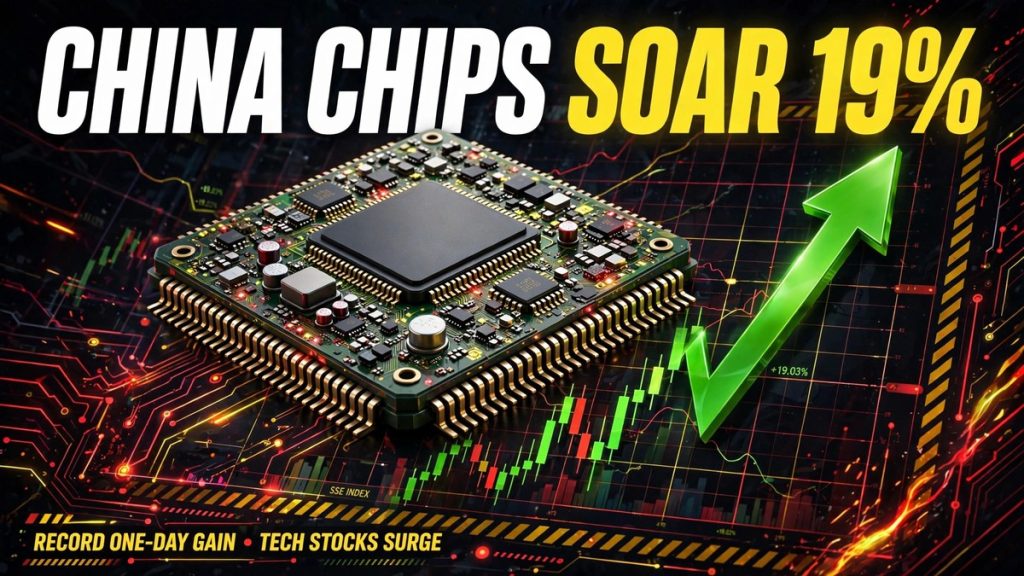
Chinese stocks staged their strongest rally in more than two years on Friday, November 27, 2026, climbing from 17-month lows after Beijing flagged a bigger role for state-backed investors in stabilising the market. Chip shares led the surge, with a sub-index tracking semiconductors jumping 19 percent in its biggest single-day gain on record.
The rally began in afternoon trading, shortly after state media reported a meeting of China’s cabinet, the State Council, chaired by Premier Li Qiang. According to Xinhua, the meeting called for Central Huijin, the state investment arm at the centre of the so-called national team of state investors, to enhance its role as a quasi-stabilisation fund. Investors read the statement as Beijing’s strongest gesture yet to support a market that had been sliding for months.
The benchmark Shanghai Composite Index ended the day up 3.7 percent, while the blue-chip CSI 300 rose 4.2 percent. Both posted their biggest daily gains since October 2024, when China rolled out massive stimulus to revive the market. The tech-focused STAR 50 Index surged 15 percent, its largest one-day jump in two years. In Hong Kong, the Hang Seng Index gained 2.1 percent, and the Hang Seng Tech Index jumped more than 6 percent.
A Market That Had Been Falling for Months
The rally arrived after a long decline. Chinese shares had been sliding relentlessly since July, weighed down by weak consumer demand, a prolonged property downturn, and the risk that trade tensions could threaten exports, the economy’s one bright spot. Before Friday’s news, the tech-heavy STAR 50 and ChiNext indexes had slumped roughly 50 percent since July.
That backdrop explains the force of the rebound. With prices at 17-month lows and many investors positioned for further falls, a credible signal of state support was enough to trigger a rush to buy. The signal arrived in the middle of the trading day, a rare midday announcement that turned an ordinary session into a scramble.
The move also followed other steps to ease selling pressure. Regulators had relaxed margin lending rules, and on Friday Xinhua Finance separately reported that they would tighten rules on share sales by controlling shareholders of listed companies and guard against listings by firms that inflate earnings. Together, the measures pointed to a coordinated effort to put a floor under prices.
Chips at the Centre of the Rally
Semiconductor shares were the standout performers. A sub-index tracking semiconductors soared 19 percent, the largest single-day gain on record for the gauge. Indexes tracking artificial intelligence, cloud computing, and consumer electronics all jumped more than 10 percent.
The focus on chips is no accident. A bigger role for the national team is widely seen as the latest sign of authorities stepping in to shore up bets on the AI infrastructure buildout. China has been investing heavily in domestic chip production and AI data centres, and the market’s sharpest falls this year had hit exactly those sectors.
The rally also spread beyond the mainland. Hong Kong-listed Chinese technology shares joined the advance, with the Hang Seng Tech Index rising more than 6 percent. The yuan, which had been weaker earlier in the session, reversed its losses as shares jumped.
What the National Team Does
China’s national team is the name traders have given to a loose collection of state investors who tend to buy shares at times of stress. Central Huijin, a lead player in the group, has acted as a buyer of last resort during past sell-offs, and its interventions are closely watched as a signal of official intentions.
The State Council meeting went further than a single buyer stepping in. It called for better policies to guide more long-term funds into the stock market, encouraged companies to increase dividends and share buybacks, and urged stronger defences against risks spilling over from overseas markets. The message was that Beijing wants steadier domestic demand for Chinese equities, not only emergency buying on bad days.
That distinction matters. For years, investors have complained that Chinese shares need better returns of cash to shareholders and more stable long-term ownership, rather than short bursts of state buying when prices fall. The meeting’s language on dividends, buybacks, and long-term funds spoke directly to that complaint.
Will the Rally Last?
Friday proved that Beijing can move prices in an afternoon. Whether it can change the deeper wariness around China’s equity markets is a different question, and investors will have the weekend to consider it.
The doubts are real. Consumer demand remains weak, the property downturn continues, and trade tensions still threaten the export engine that has carried the economy. A single day of gains, however dramatic, does not fix those problems. The STAR 50 index may have risen 15 percent in a day, but it had lost about half its value since July, and it would need far more than one strong session to recover that ground.
Market watchers will now look for follow-through. If state-backed funds keep buying, if long-term investors return, and if companies raise dividends and buybacks, the rally could mark a turning point. If the support fades after a few days, Friday may be remembered as a sharp bounce inside a longer decline.
For now, the message from Beijing is clear enough. After months of watching prices slide, the authorities have signalled that they are willing to step in, and the market has responded with its biggest gains in more than two years. The test comes next week, when traders decide whether to trust the signal or sell into the strength.
Frequently Asked Questions
How much did Chinese chip stocks rise on November 27, 2026?
A sub-index tracking semiconductors soared 19 percent, its biggest single-day gain on record. The tech-focused STAR 50 Index surged 15 percent, its largest one-day jump in two years.
What caused the rally?
State media reported that a State Council meeting chaired by Premier Li Qiang called for Central Huijin, the state investment arm, to enhance its role as a quasi-stabilisation fund, signalling stronger official support for the market.
How did the main indexes perform?
The Shanghai Composite rose 3.7 percent and the CSI 300 gained 4.2 percent, both their biggest daily gains since October 2024. Hong Kong’s Hang Seng rose 2.1 percent and the Hang Seng Tech Index jumped more than 6 percent.
What is China’s “national team”?
It is the name traders give to a loose collection of state investors, led by Central Huijin, that tends to buy shares when markets are under stress.
Had Chinese stocks been falling before the rally?
Yes. Chinese shares had slid since July on weak consumer demand, a prolonged property downturn, and trade tensions, with the STAR 50 and ChiNext indexes down roughly 50 percent from their July levels.