Kodak Tracker AirTag Rival Shows Your Photos on a Tiny E-Ink Screen
Kodak Tracker AirTag Rival Shows Your Photos on a Tiny E-Ink Screen
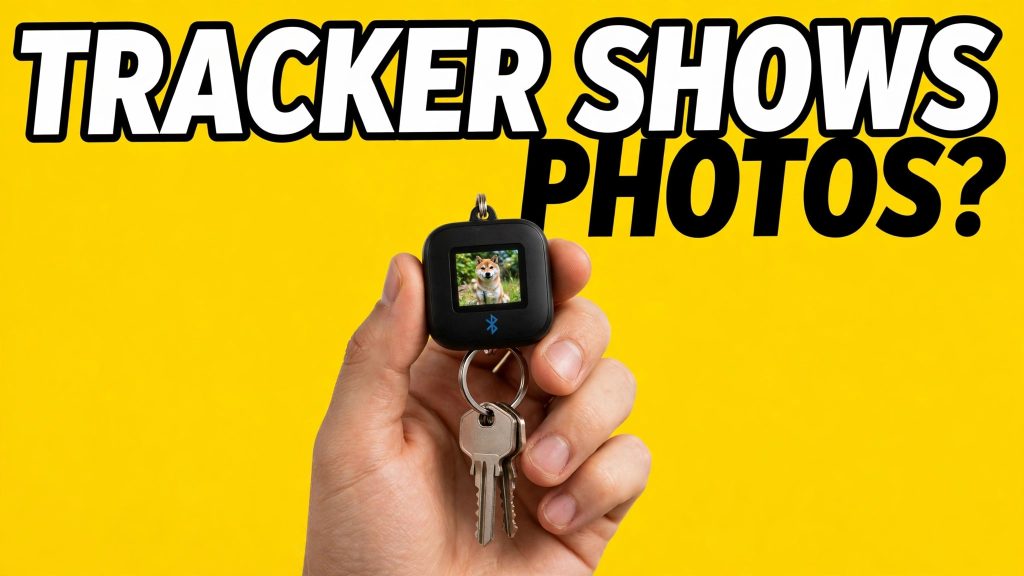
A new Kodak tracker AirTag rival can do something an AirTag cannot: it shows a photo on its face. The Kodak SlideTag, built by licensee Reto, is a small keychain tracker with a 1.54-inch colour E Ink display, and it works with both Apple Find My and Google Find Hub. It went on sale on 22 November 2026 for 35 US dollars, sold as a blind box with one of eight designs inside.
The idea is simple. Most item trackers are plain discs that disappear on a keyring. The SlideTag turns the tracker into a tiny photo frame, shaped like a classic 35 mm slide mount. A favourite photo stays visible on the screen, and the same device can still help find lost keys or a bag.
Kodak is not the maker. Reto, a Hong Kong company, designed and built the SlideTag under a licence from Eastman Kodak, the same arrangement behind the Kodak Charmera keychain camera. That distinction matters for support and expectations: this is a lifestyle accessory built under licence, not a product from Kodak itself.
What the Kodak SlideTag Is
The SlideTag is shaped like a Kodachrome slide mount, the frame that once held photographic film slides. The design draws on the 1935 Kodachrome mount, shrunk to keychain size. A square display sits inside a retro frame, with an attachment point for a keyring.
Its 1.54-inch colour E Ink screen has a resolution of 240 by 240 pixels and uses six ink colours to reproduce images. The result looks closer to a printed sticker than a phone screen, with a poster-like finish. E Ink needs power only when the image changes, so a photo stays on screen for long stretches without draining the battery.
The device measures 39.3 by 46 by 7.58 mm and weighs 16.6 grams. That makes it wider and taller than an AirTag, which measures 31.9 mm in diameter and 8 mm thick and weighs 11.8 grams, but the SlideTag is slightly thinner. Its plastic enclosure carries an IP54 rating for dust and splash resistance.
How the Photo Display Works
Photos are managed through the Kodak Memory Link app for iOS and Android, separate from the tracking features. Users can transfer up to 12 images over Bluetooth and arrange them into slideshows, or double-press a button on the back to switch images.
The screen can also show information other than photos. Users can display contact details, a QR code, a to-do list, a calendar entry, a countdown timer, or a name badge. That turns the tag into a small digital business card or a reminder on a bag or keyring.
Every SlideTag comes with a collectible 35 mm slide frame that fits a real 35 mm slide as well as other small collectibles. Reto described the product as a miniature memory holder, a way to carry a favourite moment and a story wherever the owner goes.
Tracking With Apple Find My and Google Find Hub
Once paired, the SlideTag can be located through Apple Find My on an iPhone, just like a regular tracker. It also supports Google Find Hub on Android, so the same device works for both iPhone and Android users. Most trackers lock the buyer into one system, such as AirTag for iPhones or Galaxy SmartTag2 for Samsung phones, and the SlideTag avoids that split.
It uses Bluetooth 5.4, with a real-time tracking range of up to 30 metres. A built-in buzzer sounds at 75 decibels to help find nearby belongings, and location history is available through the tracking networks. The device runs on a replaceable CR2032 coin cell, the same battery Apple uses in the AirTag.
Reto has not shared a battery life estimate for the SlideTag. An AirTag lasts about a year on its coin cell, and the SlideTag uses the same cell type, but the photo display and Bluetooth use will affect the result. The E Ink screen itself needs no power to hold an image, which helps.
Kodak Tracker AirTag Comparison: Where the AirTag Still Wins
The AirTag keeps several advantages. It uses Ultra Wideband technology for Precision Finding, which gives distance and directional guidance to nearby items on compatible iPhones. The SlideTag has no Ultra Wideband, so it cannot point the user toward a lost item in the same way.
Water resistance is another gap. The AirTag carries an IP67 rating, which protects against immersion in water up to one metre deep for up to 30 minutes. The SlideTag is rated IP54, which covers dust and splashes but not submersion.
Price also favours Apple. The second-generation AirTag sells for about 23 US dollars on Amazon, while the SlideTag costs 35 US dollars. The SlideTag costs 12 dollars more and adds a photo screen and Android support, but it is not a better tracker. Buyers who only want to find their keys will get more tracking for less money from Apple.
The Blind Box Gamble
Reto is selling the SlideTag as a collectible, using the same blind box method as the Charmera camera. Each box holds one of eight regular designs, or a much rarer secret edition. The secret silver edition appears in about one box in 64, and buyers do not know which design they will get until they open the package.
A single blind box costs 35 US dollars, and a full set of eight costs 280 US dollars, which is the same as buying eight boxes separately. The Reto online store limits each order to two single boxes or one full set, which is meant to stop resellers from buying up stock.
The blind box format has already worked for Reto. The Kodak Charmera, a tiny keychain camera sold the same way, became a collectible hit and helped build demand for Kodak-branded film gear. The SlideTag follows the same playbook, trading on nostalgia for film photography rather than on raw specifications.
Who Should Buy One, and Who Should Not
The SlideTag makes sense for a buyer who wants a keychain that shows a photo and also finds lost keys. It is the only tracker that does both, and it works across iPhone and Android. A parent who wants a child to carry a family photo, or a traveller who wants a name badge with contact details on a bag, will get more from it than from a plain tracker.
It makes less sense for a buyer who only cares about tracking. That buyer gets Precision Finding, stronger water resistance, and a lower price from an AirTag, and gives up nothing they need. The SlideTag is also a poor choice for anyone who wants a sharp, full-colour photo display, because a 240 by 240 pixel screen with six colours can only show a simplified version of a photo.
There is also the question of support. Because the product comes from Reto under licence, warranty and software support run through Reto, not through Kodak. Buyers should check the return policy and the app before ordering, especially since the blind box format means the design cannot be chosen in advance.
| Feature | Kodak SlideTag | Apple AirTag |
|---|---|---|
| Price | 35 US dollars | About 23 US dollars |
| Display | 1.54-inch colour E Ink, 240 by 240 pixels, six colours | None |
| Tracking networks | Apple Find My and Google Find Hub | Apple Find My |
| Precision Finding | No | Yes, Ultra Wideband |
| Water resistance | IP54 | IP67 |
| Battery | Replaceable CR2032 | Replaceable CR2032 |
| Size and weight | 39.3 by 46 by 7.58 mm, 16.6 g | 31.9 mm diameter, 8 mm thick, 11.8 g |
Frequently Asked Questions
How much does the Kodak SlideTag cost?
A single blind box costs 35 US dollars, and a full set of eight costs 280 US dollars. The Reto store limits orders to two single boxes or one full set.
Does the Kodak SlideTag work with Android?
Yes. It supports Google Find Hub on Android as well as Apple Find My on iPhone, so it works across both systems.
How many photos can the SlideTag hold?
It stores up to 12 photos, which can rotate as a slideshow. Photos are loaded through the Kodak Memory Link app over Bluetooth.
Is the SlideTag waterproof?
No. It is rated IP54 for dust and splash resistance, which is lower than the AirTag at IP67. It should not be submerged in water.
Who makes the Kodak SlideTag?
Reto, a Hong Kong company, designed and built it under a licence from Eastman Kodak. Kodak itself did not build the device.
The Kodak SlideTag is not the best tracker on the market, and it does not try to be. It is a small piece of film nostalgia that also happens to find lost keys, and that combination is the whole point. For a buyer who wants a photo on a keyring and a tracker in the same device, there is nothing else like it at 35 dollars. For a buyer who only wants the best tracking, the AirTag still wins on price, precision, and water resistance.