One Million US Homes at Risk of Being Abandoned Because of Flooding
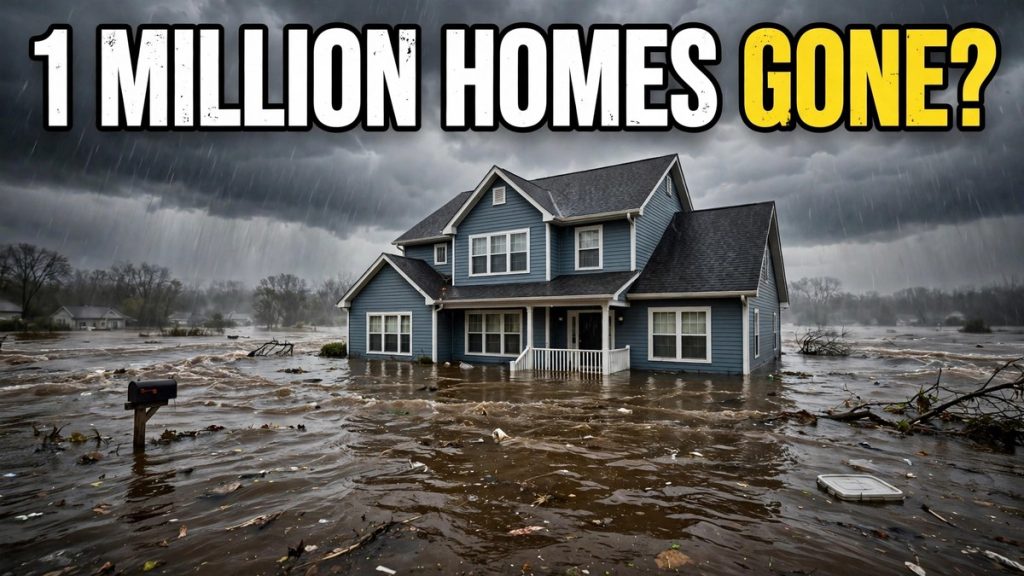
One Million US Homes at Risk of Being Abandoned Because of Flooding
Around one million homes in the United States sit in areas so prone to flooding that a new report says the country would save more than one trillion dollars by buying them, demolishing them and moving the people who live there to higher ground. The finding puts a stark number on a problem that has been growing for decades, and it raises a difficult question about US homes flooding risk: how many houses should never have been built where they stand?
The report, cited by Scientific American and based on research reported by E and E News, says buying and demolishing about one million flood-prone homes would cost 180 billion dollars. That spending would generate 1.16 trillion dollars in savings over 100 years, mostly by avoiding property damage that is now paid for through federally subsidised flood insurance and other disaster programmes. The authors conclude that buyouts represent permanent flood mitigation.
Flooding is already the most common weather disaster in the United States, and it is the most expensive in the long term. The National Oceanic and Atmospheric Administration, known as NOAA, has recorded a sharp rise in billion-dollar weather disasters over the past decade. For homeowners in flood zones, the risk is not abstract. It is water in the living room, a ruined kitchen, a mortgage on a house that no one wants to buy.
A Million Homes in the Wrong Place
The one million homes in the report are not spread evenly across the country. They are concentrated on floodplains, along rivers and on low-lying coasts, in places where water has flooded before and will flood again. Many were built before modern flood maps existed, or before the maps were updated to reflect heavier rainfall and rising seas.
Keith Porter, one of the authors of the study and a structural engineering researcher at the University of Colorado, put the point plainly. He said the country never should have been building in the floodplain in the first place, and that flooding is the country’s biggest risk. His argument is that the cheapest house to protect from flooding is the one that is never built in a flood zone.
The Federal Emergency Management Agency, known as FEMA, has bought out about 43,000 homes since the late 1980s. That programme is small compared with the scale of the problem. It has been slowed by a lack of funding, by homeowners who do not want to move, and by the paperwork needed to relocate residents. The new report argues that the programme should be expanded sharply, because the cost of doing nothing is higher.
Why Flood Insurance Cannot Fix the Problem
The National Flood Insurance Program, run by FEMA, is more than 20 billion dollars in debt to the United States Treasury. The debt built up over years of underpriced policies, which charged homeowners less than the true cost of the risk. When a house floods again and again, the programme pays again and again, and the debt grows.
FEMA’s flood maps, which are used to decide who must buy flood insurance, cover less than half the country, and in many places they are decades out of date. That means millions of homeowners have no idea they are at risk. The First Street Foundation, which analyses flood risk in the United States, estimates that 14.6 million properties face substantial flood risk today, compared with the 8.7 million identified by FEMA maps.
That gap leaves nearly six million properties whose owners may have no flood insurance. About 70 percent of flood losses in the United States, roughly 17 billion dollars a year, are uninsured. When a flood hits, those homeowners face the full cost themselves, or they rely on disaster aid that does not cover the full loss.
FEMA began repricing flood insurance in 2021 under a programme called Risk Rating 2.0. Premiums in many areas are rising sharply as a result, because they now reflect the risk at each individual property. Higher premiums are unpopular, but they also send a signal: a house that floods often is expensive to insure, and that cost should be visible to buyers and owners.
How Buyouts Work, and Why They Are Difficult
A buyout is simple in principle. The government buys a flood-prone house at a fair price, demolishes it, and turns the land into open space that can flood without causing damage. The homeowner moves to higher ground, and the taxpayer stops paying for repeated repairs. The report concludes that buyouts are the only form of flood mitigation that is permanent.
In practice, buyouts are slow and painful. A homeowner may have lived in a house for decades, raised children there, and built a life around a neighbourhood, a school and a church. Moving means leaving all of that behind. Some homeowners refuse to sell, even after repeated floods, because they do not want to leave or because they cannot afford a comparable house elsewhere.
Funding is also a problem. A buyout programme for one million homes would cost 180 billion dollars, a large sum even spread over many years. The report argues that the spending would pay for itself, with 1.16 trillion dollars in savings over a century, but governments work on shorter budgets, and a programme that pays off over 100 years is hard to fund in a single year.
There is also a question of fairness. Low-income homeowners are more likely to live in flood-prone areas, because the land is cheaper. If buyouts are voluntary, wealthier homeowners may take the money and move, while poorer homeowners stay because they cannot afford to move even with a buyout payment. If buyouts are compulsory, they raise questions about property rights and about who decides which neighbourhoods disappear.
The Human Cost of Staying Put
For many families, the cost of flooding is measured in more than dollars. A flood can destroy photographs, furniture and appliances that took years to buy. It can force a family to live in a hotel or with relatives for months while repairs are carried out. It can also affect health, because floodwater carries sewage, chemicals and mould into a home.
Repeated flooding can also trap a family financially. A house that floods often loses value, which makes it harder to sell and harder to borrow against. A homeowner who owes more on a mortgage than the house is worth cannot move without taking a loss. That trap is one reason why some flood-prone neighbourhoods become abandonment zones, where houses are left empty and the tax base shrinks.
First Street reported that millions of Americans have already left flood-prone places. The foundation estimated that about 3.2 million Americans have left such areas, and it predicted that the number could grow to 11 million over the next three decades. By 2070, it said, at least four million Americans could live at the fringe, in places outside the ideal niche for human life.
Those numbers describe a slow migration, not a sudden evacuation. People leave one by one, after a flood, after an insurance bill, or after a neighbour leaves. The result is a neighbourhood that empties gradually, with fewer shops, fewer services and fewer neighbours, until the remaining residents feel isolated.
What Homeowners Can Do Now
Homeowners who are worried about US homes flooding risk can start by checking their flood risk. FEMA maps are a starting point, but they are incomplete, and private flood risk tools can give a more detailed picture. A homeowner should check not only whether a house is in a mapped flood zone, but also whether it is near a river, a coast or a low-lying area that has flooded before.
Insurance is the second step. A standard homeowners policy does not cover flooding. Flood insurance is a separate policy, available through the National Flood Insurance Program and through some private insurers. A homeowner in a high-risk area should compare the cost of a policy with the cost of a single flood, which can easily run into tens of thousands of dollars.
Practical steps can also reduce damage. Raising electrical systems, installing a sump pump, using water-resistant materials in a basement and keeping important documents in a waterproof container will not prevent a flood, but they can reduce the cost of cleaning up afterwards. Local governments can also help, by improving drainage, by clearing blocked channels and by enforcing building rules that keep new houses out of the worst flood zones.
For buyers, the advice is simpler. Before buying a house, check its flood history, ask the seller whether it has flooded before, and check the insurance cost. A house that is cheap because it floods often is not a bargain. The cost of flooding will appear later, in repairs, in insurance premiums and in a lower resale value.
Frequently Asked Questions
How many US homes are at risk from flooding?
A new report focuses on about one million homes in the most flood-prone areas. A wider estimate from the First Street Foundation puts 14.6 million properties at substantial flood risk, compared with 8.7 million identified by FEMA maps.
What would buyouts cost, and what would they save?
Buying and demolishing about one million homes would cost 180 billion dollars and would generate 1.16 trillion dollars in savings over 100 years, mostly by avoiding repeated flood damage.
Why is the flood insurance programme in debt?
The National Flood Insurance Program is more than 20 billion dollars in debt, after years of charging less than the true cost of flood risk and paying for repeated damage to the same properties.
Should homeowners in flood zones move?
There is no single answer. A buyout can be the right choice for a house that floods often, but moving is a personal decision that depends on family, work, finances and attachment to a neighbourhood.
How can I check my own flood risk?
Start with FEMA flood maps, then check a private flood risk tool, ask about the flood history of a property, and get a quote for flood insurance before buying or renovating.
The report on US homes flooding risk does not argue that every flood-prone house should be demolished tomorrow. It argues that the country can no longer afford to keep rebuilding the same houses in the same places, and that a buyout programme, however difficult and expensive, is cheaper in the long run than paying for the same flood again and again.